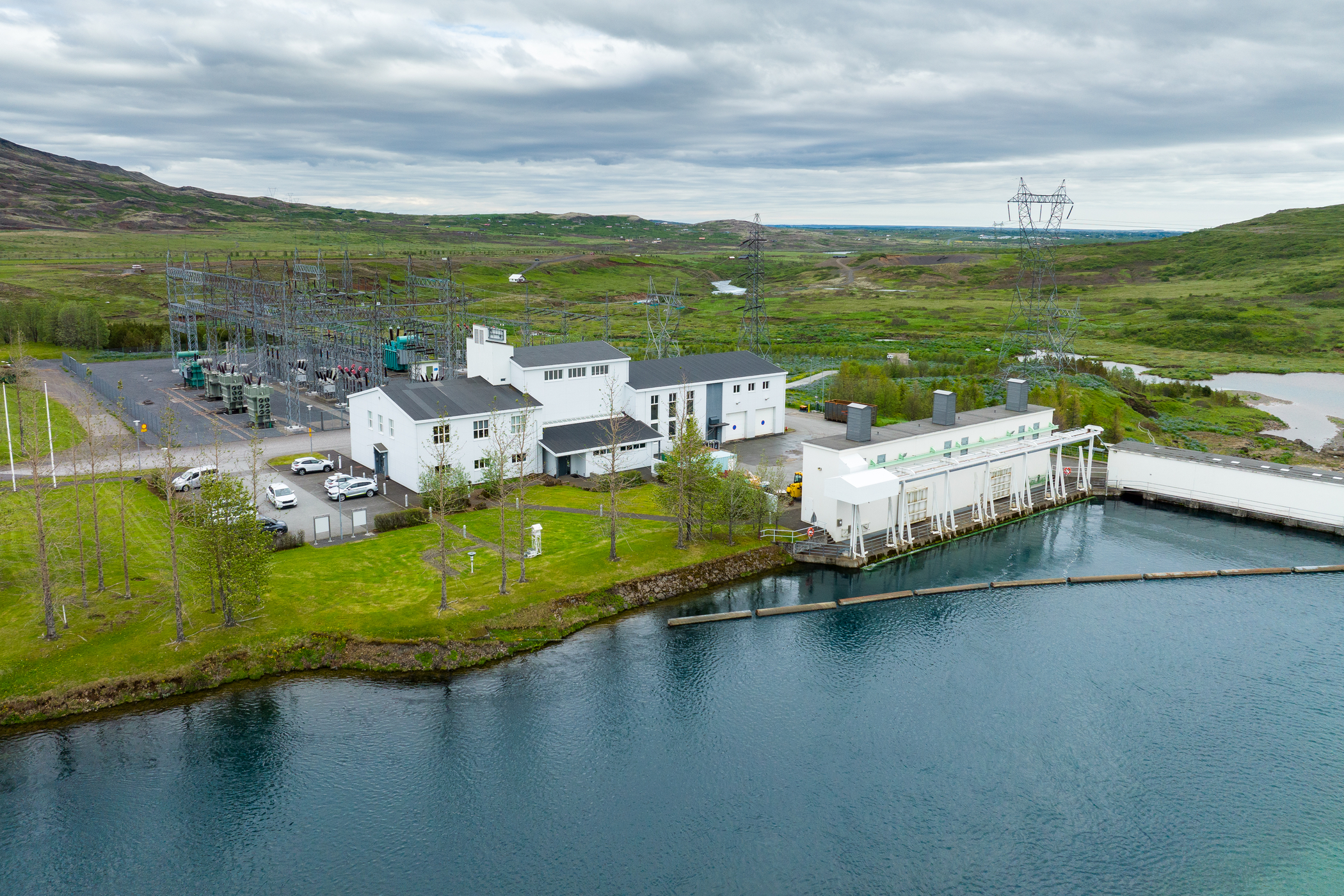
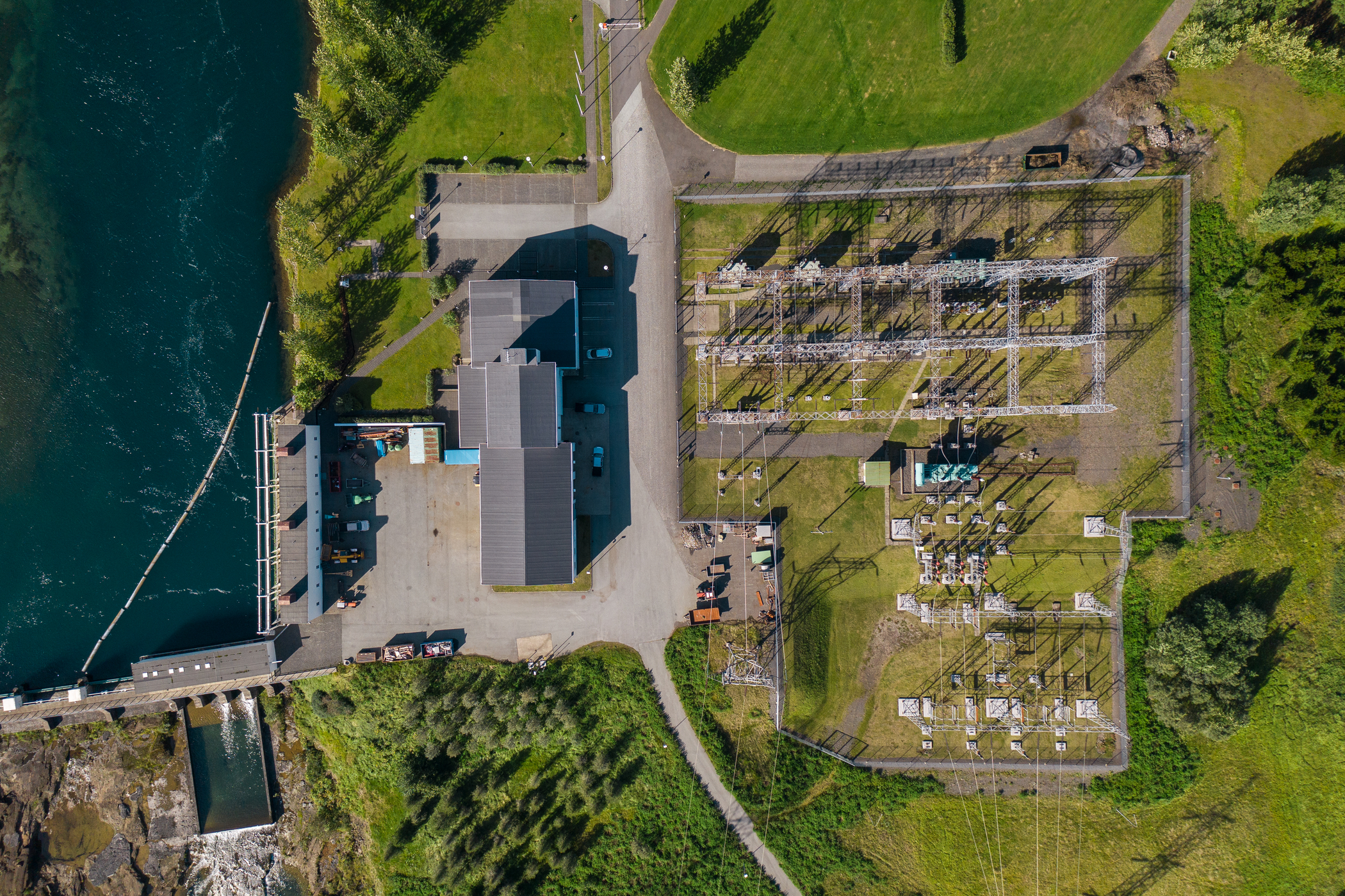
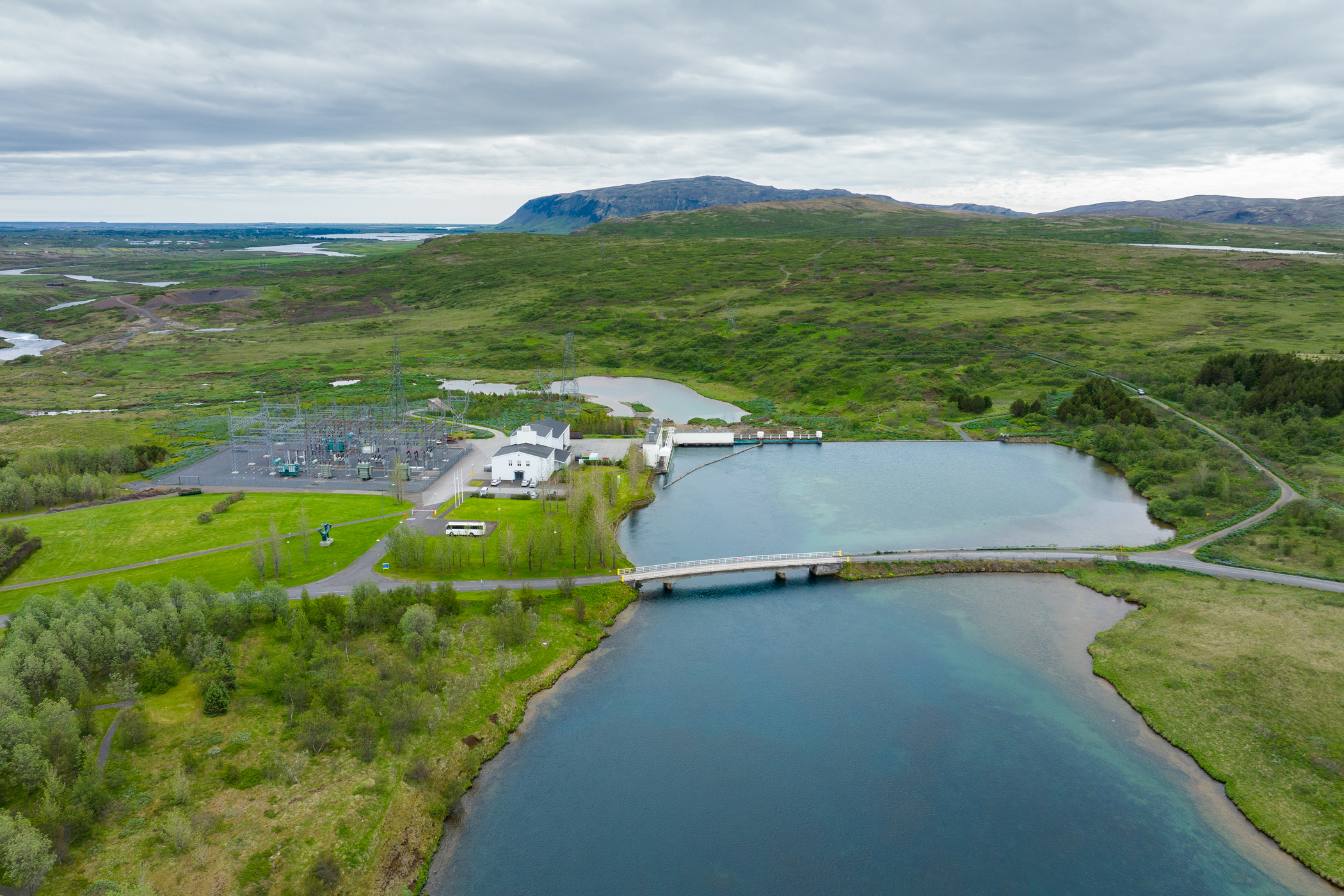
The Sog is Iceland’s largest spring-fed river. It flows from Lake Þingvallavatn through Lakes Úlfljótsvatn and Álftavatn before joining the Hvítá River to form the Ölfusá River. Most of its water originates from springs on the floor of Lake Þingvallavatn, giving the river an unusually stable and consistent flow.
From Lake Þingvallavatn to the Hvítá River, the Sog flows for only about 20 kilometres. Along this short stretch, a considerable head is available for hydropower generation, first between Lakes Þingvallavatn and Úlfljótsvatn and then at the waterfalls Ljósifoss, Írafoss and Kistufoss.
These natural conditions made the Sog one of Iceland’s most favourable locations for early hydropower development. The first plans to harness the river were prepared in the 1920s, and electricity generation began in 1937 with the commissioning of Ljósafoss Power Station.
Over the following decades, three power stations were built on the river: Ljósafoss Power Station, Írafoss Power Station and Steingríms Power Station. Together, they played a key role in the electrification of Iceland and supplied a large share of the country’s electricity during the formative years of its power system.